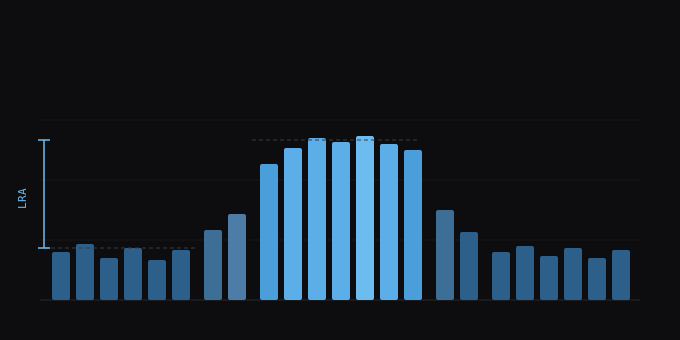
Mixes that feel either relentlessly loud and fatiguing, or inconsistently quiet and loud between sections, have quantifiable dynamic variation problems. Loudness Range measures this sectional variation to reveal whether your mix breathes or feels static.
What lra-loudness-range reveals (and why it matters)
Loudness Range (LRA) measures the variation in loudness across a track, reported in Loudness Units (LU), where 1 LU equals 1 dB. A high LRA indicates large dynamic swings between sections. A low LRA indicates relatively consistent level throughout.
This measurement transforms raw loudness data into actionable insight about sectional dynamics. Where integrated loudness tells you average level and crest factor reveals instantaneous peak-to-average relationships, LRA quantifies whether your chorus actually lifts from the verse or whether the whole track sits at the same perceived volume from bar one.
The problem LRA solves is invisible to traditional metering. Peak meters show instantaneous level. Loudness meters report average perceived volume. Neither reveals whether sectional variation exists. A verse at -14 LUFS and a chorus at -14 LUFS look identical on a loudness meter, but one might have dynamic lift within its material while the other sits static. LRA captures this between-section movement.
For mix engineers, this matters because sustained engagement requires dynamic movement. Mixes with appropriate LRA feel alive and sustain listener attention. Mixes with LRA below 2 LU sound relentless and fatiguing. Mixes with LRA above 12 LU may feel inconsistent in streaming playlist contexts, though genre determines whether this constitutes a problem or an artistic intention (Source: inputs/articles/lra-loudness-range/brief.md#Core message).
The metric distinguishes sectional variation from momentary dynamics. Crest factor captures transient peaks within a bar. LRA captures perceived loudness differences across verses, choruses, bridges, and breakdowns. Both matter, but they reveal different aspects of how a mix moves.
How lra-loudness-range works: technical methodology
LRA is calculated using the EBU R128 standard via the pyloudnorm library's loudness_range() method, which implements the ITU-R BS.1770 LRA algorithm (Source: inputs/articles/lra-loudness-range/brief.md#How LRA is calculated).
The calculation divides the track into short-term loudness blocks. Each block represents a brief time window analysed for integrated loudness. These blocks generate a statistical distribution of loudness values across the entire track. LRA reports the range between the 10th and 95th percentiles of this distribution, filtering extreme outliers while capturing meaningful variation.
This percentile approach distinguishes LRA from simple peak-to-peak measurements. A track with one quiet intro bar and one loud chorus peak would show wide peak-to-peak range but might have tight LRA if 90% of the material sits at similar loudness. The 10th/95th percentile window ensures LRA reflects sustained sectional differences rather than momentary extremes.
Why percentiles rather than absolute minimum and maximum values? A single quiet bar in an intro or a single peak in a bridge would distort absolute range calculations. The 10th percentile represents the loudness level below which only the quietest 10% of blocks fall. The 95th percentile represents the level above which only the loudest 5% of blocks rise. The range between these thresholds captures the meaningful loudness variation where the track actually lives, excluding outlier moments.
Short-term blocks use a time window sufficient to capture perceived loudness but brief enough to distinguish sections. This windowing lets the algorithm detect when a verse sits quieter than a chorus, or when a breakdown drops level before the final lift. The blocks accumulate into a distribution that shows how much of the track sits at each loudness level.
The implementation wraps calculation in try/except handling. Very short files or files with unusual structure return null rather than unreliable values. This prevents false severity ratings on content not suited to LRA analysis. Files shorter than the required measurement window cannot generate reliable sectional variation data (Source: inputs/articles/lra-loudness-range/brief.md#How LRA is calculated).
Interpreting lra-loudness-range values and outputs
LRA values map to a severity rating system that contextualises whether dynamics variation is appropriate for commercial music (Source: inputs/articles/lra-loudness-range/brief.md#Interpreting LRA values).
Below 2 LU: Critical. The mix has no dynamic variation. This indicates relentless, fatiguing consistency from start to finish. Regardless of genre, values this low signal over-processing that eliminates sectional contrast. A reading below 2 LU means the loudest sustained section differs from the quietest sustained section by less than 2 dB. Every section sits at essentially the same perceived volume. Listeners experience this as exhausting uniformity. The mix demands constant attention without offering dynamic relief.
2–5 LU: Caution. Tight dynamics are present but limited. This range is common and intentional in heavily processed electronic music. In other genres, values between 2 and 5 LU often feel lifeless. Context determines whether this represents appropriate control or over-compression. A techno track with 4 LU LRA may sound controlled and driving. A folk ballad with 4 LU LRA sounds crushed and unnatural. The same numerical value carries different artistic meaning depending on arrangement, instrumentation, and genre expectations.
5–12 LU: Good. Natural dynamics are present. The mix breathes. Sectional variation sustains engagement without feeling inconsistent. This range applies to most commercial music across pop, rock, hip-hop, and folk. A value of 8 LU indicates the chorus sits roughly 8 dB louder than the verse in perceived loudness, creating clear sectional lift without jarring contrast. Listeners perceive this as natural movement. The track maintains energy while allowing dynamic ebb and flow.
Above 12 LU: Caution. Wide dynamic range is present. This may feel inconsistent when the track appears in streaming playlists alongside material with tighter dynamics. Classical music and film scores routinely exceed 12 LU by artistic intention. For commercial music targeting playlist placement, values above 12 LU warrant sectional level review. A 15 LU reading means the loudest section exceeds the quietest by 15 dB in sustained perceived loudness. In orchestral music, this expressive range serves the composition. In a pop single competing for playlist placement, it may cause the verse to feel buried or the chorus to feel jarring.
The severity labels guide interpretation but do not dictate fixes. A caution rating prompts review. It does not mandate change. The goal is informed decision-making about whether the measured variation serves the track or undermines it.
How lra-loudness-range integrates with other systems
LRA does not directly factor into quality tier scoring in the MixCoach.ai analysis pipeline. It provides context for dynamics assessment but does not penalise or reward the overall quality rating (Source: inputs/articles/lra-loudness-range/brief.md#How LRA feeds into AI coaching).
This design decision reflects how dynamics assessment requires multiple measurements. No single metric captures the full picture of how a mix moves. Quality tier scoring penalises specific technical deficiencies that harm perceived quality regardless of genre. LRA varies appropriately by genre and artistic intent, making it unsuitable for universal quality thresholds.
Very low LRA values often correlate with low crest factor. When both metrics flag tight dynamics, the analysis identifies over-compression. Crest factor penalises quality tier directly; LRA supplies supporting evidence that the compression issue extends across sectional boundaries, not just within individual bars. A mix scoring 6 dB crest factor and 3 LU LRA shows dynamics problems on two timescales. The coaching system flags this pattern and recommends reduced compression rather than treating each metric in isolation.
The AI coaching system uses LRA to determine whether dynamics-related fixes should appear in the prescription. A mix with low LRA and low crest factor may trigger a "dynamics" priority fix recommending reduced bus compression or adjusted gain staging. LRA alone does not trigger fixes, but combined with crest factor it shapes diagnostic messaging. The prescription might read: "Reduce bus compression to restore sectional dynamics and preserve transient detail." This guidance draws on both measurements.
This integration treats LRA as contextual data rather than a pass/fail gate. The metric reveals patterns that inform broader dynamics assessment without enforcing a single target value across all genres. An EDM track with 4 LU LRA does not trigger warnings. A folk ballad with 4 LU LRA flags for review. The system applies genre-aware interpretation rather than universal thresholds.
Practical application and workflow
LRA becomes actionable when combined with genre context and crest factor readings.
Genre-appropriate targets
For pop and rock mixes, target 8–10 LU. This range provides natural sectional lift without feeling static. A reading in this range paired with crest factor above 10 dB indicates healthy dynamics across both instantaneous and sectional timescales. The chorus lifts from the verse. The bridge provides contrast. The track moves.
For heavy electronic music and EDM, 4–8 LU represents intentional artistic control. Tight LRA suits the aesthetic. The relentless energy characteristic of these genres depends on sustained intensity. Values below 4 LU still signal problems; even heavily processed electronic music benefits from some sectional variation. A breakdown or filter sweep creates momentary dynamic shift that prevents fatigue.
For acoustic, folk, and singer-songwriter material, 10–15 LU captures expressive dynamics. Wide LRA is appropriate for arrangements with substantial level differences between sparse verses and full choruses. A solo vocal and guitar verse followed by a full-band chorus naturally produces wide loudness variation. This expressive range supports the storytelling and emotional arc of the song.
For classical and film music, LRA routinely exceeds 15 LU. These genres depend on wide dynamic range for artistic impact. High LRA readings are not problems to fix but characteristics to preserve. A quiet string passage building to a full orchestral climax may span 20 LU or more. This serves the composition.
Diagnostic workflow
When LRA flags below 5 LU in a genre that should breathe, reduce bus compression. Allow verses and choruses to sit at different perceived volumes. Check that automation or gain staging permits sectional variation rather than forcing every section to the same target loudness. Review mix bus processing chains. Aggressive limiting or multi-band compression can crush sectional dynamics even when individual tracks have appropriate movement.
When LRA flags above 12 LU in commercial music targeting streaming playlists, review sectional levels. Inconsistent gain staging or uncontrolled vocal dynamics may cause unwanted variation. Confirm the wide range serves the arrangement rather than revealing mixing inconsistencies. Check for sections where level drops unintentionally. Verify that automation rides maintain consistent vocal presence while allowing musical dynamics.
LRA vs. crest factor: complementary measurements
Combine LRA with crest factor readings. A mix showing 3 LU and 6 dB crest factor has tight dynamics on both sectional and instantaneous scales. This indicates heavy compression across the entire signal chain. The mix lacks both transient punch and sectional movement. Every bar sounds crushed, and every section sits at the same level.
A mix showing 10 LU and 6 dB crest factor has good sectional variation but crushed transients. This indicates aggressive bus limiting that preserves sectional loudness differences but eliminates transient detail. The chorus lifts from the verse, but the drums and vocals lack attack. This pattern suggests excessive peak limiting applied after sectional dynamics were established.
A mix showing 3 LU and 14 dB crest factor has minimal sectional variation but healthy transient peaks. This indicates sectional dynamics need opening up while instantaneous dynamics are appropriate. Drums hit with natural attack. Vocals retain clarity. But the verse and chorus sit at identical perceived loudness. This pattern suggests bus compression is crushing sectional lift while track-level processing preserves transients.
Understanding these patterns guides targeted fixes. LRA identifies whether the problem exists between sections. Crest factor identifies whether the problem exists within bars. Together, they reveal where in the signal chain dynamics are lost.
What does lra-loudness-range measure? LRA measures the variation in loudness across a track, reporting the statistical range between the 10th and 95th percentiles of short-term loudness blocks in Loudness Units (LU).
How do I interpret lra-loudness-range outputs? Values between 5 and 12 LU indicate healthy dynamics for most commercial music. Below 5 LU signals tight dynamics that may feel static; above 12 LU suggests wide variation that may feel inconsistent in playlist contexts.
Loudness Range (LRA) measures the variation in loudness across a track using the EBU R128 standard, reporting values in Loudness Units (LU). Healthy commercial music typically falls in the 5–12 LU range, with different genres having appropriate variations—EDM often sits lower (4–8 LU) while classical routinely exceeds 12 LU.
Summary and key takeaways
LRA quantifies sectional loudness variation. It reveals whether mixes sustain engagement through dynamic movement or fatigue listeners through static consistency.
The 5–12 LU range applies to most commercial music. Below 5 LU indicates tight dynamics that may feel relentless. Above 12 LU suggests wide variation that suits classical and film music but may challenge commercial streaming contexts.
Genre context governs interpretation. EDM intentionally sits between 4 and 8 LU. Classical music routinely exceeds 15 LU. Apply the appropriate range for your genre and artistic intent rather than forcing all material into one target.
LRA complements crest factor. Use both metrics together for complete dynamics assessment. LRA measures sectional variation; crest factor measures instantaneous peak-to-average relationships. A mix needs appropriate readings on both scales to demonstrate healthy dynamics across all timescales.