Analysis systems that identify problems without providing specific solutions leave engineers to figure out the fix themselves. Priority fixes provide exactly five ranked actionable repair instructions with specific numbers for immediate implementation.
Each fix follows a strict structure: issue label, problem description, precise action with numbers, and ear training guidance. The system enforces quality constraints that ensure every instruction can be implemented immediately in your DAW without guesswork.
What priority-fixes reveals (and why it matters)
Priority fixes is a list of exactly five actionable repair instructions ranked from highest to lowest impact, generated by a two-stage AI coaching pipeline (Source: inputs/articles/priority-fixes/brief.md#Core message). Each fix contains specific numbers: Hz values for filters, dB adjustments for cuts or boosts, Q values for EQ bands, compression ratios, or time values in milliseconds.
The system transforms raw mix measurements into surgical prescriptions. Where analysis systems show you that energy at 60Hz is excessive, priority fixes tell you to high-pass at 35Hz and cut 4dB at 60Hz with Q 1.4. Where other tools identify compression problems, priority fixes specify reducing bus compression ratio from 4:1 to 2:1.
This specificity matters because it eliminates the translation step between problem identification and DAW implementation. Each instruction is directly actionable without interpretation or experience-based guessing.
The ranking mechanism places the highest-impact fix first, often addressing prerequisite problems that must be resolved before tackling subsequent issues. This sequencing reflects not just severity but interdependencies between problems.
How priority-fixes works: technical methodology
Priority fixes emerge from a two-stage AI pipeline that separates diagnosis from prescription (Source: inputs/articles/priority-fixes/brief.md#Key accuracy requirements). Stage 1 receives all raw measurements: band energies across frequency ranges, LUFS values, true peak levels, crest factor, loudness range (LRA), stereo correlation coefficients, and phase information.
The diagnostic agent processes these measurements and produces 3–5 critical issues ranked by severity, each anchored to specific measurement values. This diagnostic output includes the measurements themselves and an assessment of their impact on the final mix.
Stage 2 receives both the diagnostic findings from Stage 1 and the complete raw measurement set. This dual context allows the prescription agent to write surgical fixes that address the diagnosed problems with precision informed by both the raw data and the diagnostic interpretation.
The AI model configuration controls which provider and model handle the prescription generation (Source: inputs/articles/priority-fixes/brief.md#Page structure sections). The system defaults to OpenAI GPT-4o but supports alternative providers like Claude (claude-opus-4-6) through the AI_PROVIDER environment variable.
The prompt engineering positions the model as a "Senior Mastering Engineer known for brutal technical accuracy and granular advice", establishing a professional expertise level rather than generic AI response patterns. This framing produces output that reads like instructions from an experienced engineer rather than algorithmic suggestions.
The output format requirement enforces valid JSON only, with exactly five items structured according to the four-field template. Non-compliant responses trigger regeneration until the format requirements are satisfied.
Interpreting priority-fixes values and outputs
Each fix follows a mandatory four-field structure that ensures consistency across all generated prescriptions (Source: inputs/articles/priority-fixes/brief.md#Key accuracy requirements).
The issue field provides a short label, maximum six words, that names the problem concisely. Examples include "Sub bass overloading the mix" or "Harsh 3kHz frequency build-up".
The description field contains one sentence explaining the problem and its impact on the mix. This contextualises the issue: "The sub bass at 60Hz is masking the kick drum and reducing low-end clarity" or "The vocal sibilance at 8kHz is causing listener fatigue".
The fix field delivers the precise action with specific numbers required for implementation. Every fix must contain at least one measurable value: frequency in Hz, gain adjustment in dB, Q factor for filters, compression ratio, threshold level, attack or release time in milliseconds (Source: inputs/articles/priority-fixes/brief.md#Key accuracy requirements). This constraint prevents vague guidance like "fix the bass problem" or "use less compression".
The ear_training field tells you what you will hear after implementing the fix: "The kick will punch through more clearly and the low end will feel tighter" or "The vocal will sound smoother without the sharp edges on S sounds". This creates an expectation that helps you verify the fix worked correctly.
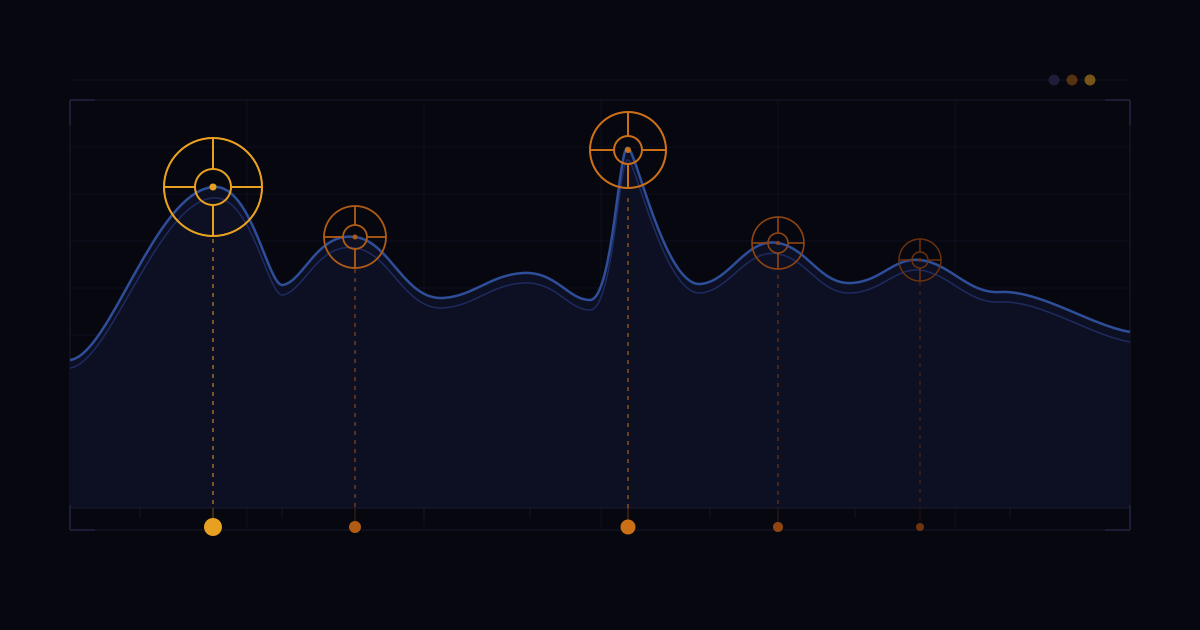
The first fix receives "Fix first" styling with visual urgency indicators (Source: inputs/articles/priority-fixes/brief.md#Page structure sections). This ranking signals both highest impact and often prerequisite status. Fixing the most critical issue first may change how other problems manifest, making the subsequent fixes more accurate.
Fixes 2–5 use "High" and "Important" styling to indicate they remain critical but carry lower immediate impact than the first fix. The ranking reflects both severity and problem interdependencies assessed during the diagnostic stage.
How priority-fixes integrates with other systems
Priority fixes occupy the prescription section of the results page, positioned below the metric cards in the visual hierarchy (Source: inputs/articles/priority-fixes/brief.md#Page structure sections). This placement reflects their role as actionable responses to the measurements displayed above.
The system presents fixes in a numbered table format with four columns corresponding to the four required fields. This consistent structure enables predictable scanning: engineers can quickly locate the specific numbers they need to implement each fix.
Priority fixes relate to a secondary set of minor adjustments that follow the same four-field structure but address lower-priority issues (Source: inputs/articles/priority-fixes/brief.md#Page structure sections). The minor adjustments list contains 3–5 additional items that matter but carry less immediate impact than the priority fixes.
Both priority fixes and minor adjustments generate in the same AI call, using the same prompt framework and quality constraints. The distinction is relative priority assessed during the diagnostic stage, not a difference in format quality or specificity. All fixes, whether priority or minor, contain specific numbers and actionable instructions.
The two-stage pipeline means priority fixes benefit from diagnostic context that pure measurement analysis cannot provide. The diagnostic agent identifies not just individual problems but relationships between problems: which issues cascade into others, which must be addressed first, which represent symptoms rather than root causes.
Practical application and workflow
Priority fixes work best when approached sequentially, starting with the first fix and moving through the list in order. The ranking reflects not just severity but dependencies, so addressing fixes out of sequence may produce suboptimal results.
When you receive your priority fixes, read all five before implementing any. This overview helps you understand the complete picture of what the analysis identified. Sometimes the relationship between fixes becomes clearer when you see them together.
Implement the first fix completely before moving to the second. After making the adjustment, listen critically to verify you hear the change described in the ear_training field. If the expected improvement does not materialise, check your implementation matches the specified numbers exactly.
For fixes involving EQ adjustments, the specified Q values matter as much as the frequency and gain values. A narrow cut (high Q like 3.0) behaves differently from a broad cut (low Q like 0.7). Use the exact Q value provided rather than approximating.
For compression fixes specifying ratio changes, adjust the ratio first, then reassess threshold and makeup gain as needed. The fix provides the primary parameter change; you may need to compensate supporting parameters to maintain overall levels.
After implementing all five priority fixes, listen to the complete mix before addressing minor adjustments. The priority fixes often resolve cascading problems, making some minor adjustments unnecessary or changing their optimal implementation.
If a fix suggests a technique or processing you are unfamiliar with, implement it anyway using the provided numbers. The precision of the instruction reduces the usual risk of experimental techniques. You can A/B the change to hear the before and after directly.
Reference recordings remain valuable even with specific instructions. Comparing your mix to reference tracks after implementing fixes helps verify the changes move your mix in the intended direction.
What is priority-fixes? Priority fixes is a list of exactly five actionable repair instructions ranked by impact, generated by a two-stage AI pipeline that combines diagnostic analysis with surgical prescription. Each fix contains specific numbers (Hz, dB, Q, ratio, milliseconds) structured as issue label, problem description, precise action, and ear training guidance.
Summary and key takeaways
Priority fixes combine AI-powered analysis with mastering-engineer precision by enforcing strict formatting constraints that prevent vague guidance.
The two-stage pipeline separates problem diagnosis from solution prescription, allowing the prescription agent to write fixes informed by both raw measurements and diagnostic interpretation. This dual context produces more accurate, specific instructions than single-stage analysis.
The four-field structure ensures every fix provides both the specific action to take and the expected auditory result. The requirement that every fix must contain at least one number eliminates ambiguous guidance.
The first fix receives special visual emphasis because it typically addresses the highest-impact problem and often represents a prerequisite for subsequent fixes. Implementing fixes sequentially respects these dependencies and produces better results than addressing issues in arbitrary order.
Priority fixes differ from minor adjustments in relative impact, not format quality. Both use the same four-field structure and specific number requirements, ensuring all guidance is directly implementable in your DAW without interpretation.