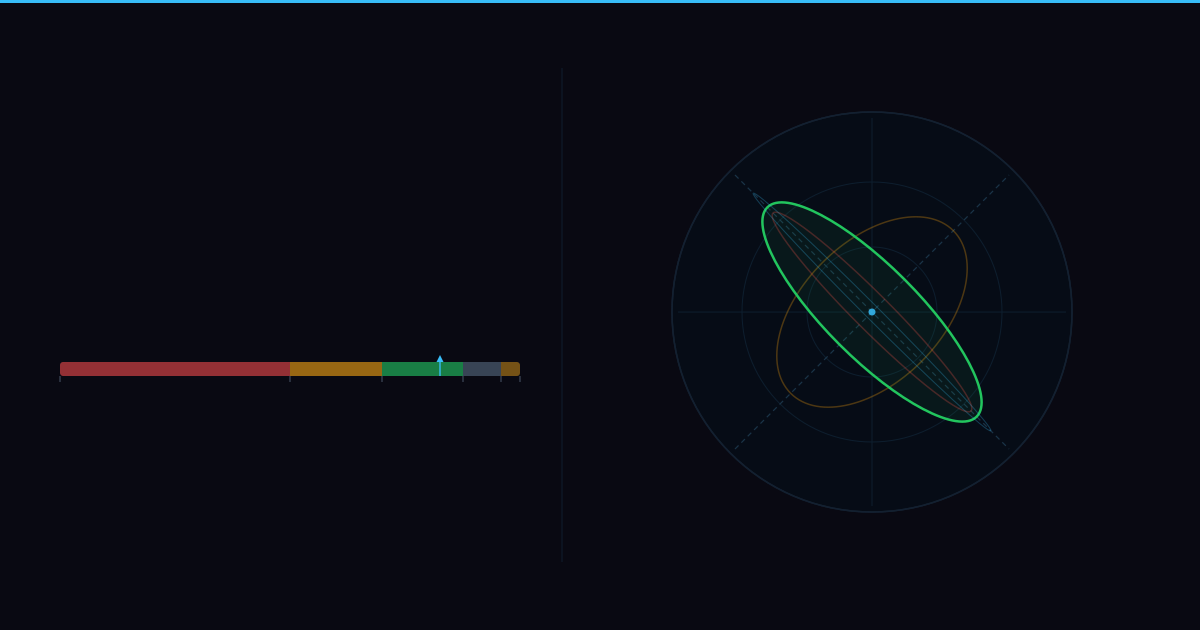
Mixes that sound great in stereo can lose key elements when played on mono devices. Stereo correlation diagnoses this translation problem before listeners experience phase cancellation on phone speakers and club PAs.
What stereo-correlation reveals (and why it matters)
Stereo correlation is a measure of the statistical relationship between left and right channels, expressed on a scale from −1 to +1. A healthy mix sits between 0.4 and 0.8—wide enough to sound spacious but correlated enough to survive mono playback without significant cancellation (Source: inputs/articles/stereo-correlation/brief.md#Core message).
The metric addresses a fundamental problem in modern mixing: a large proportion of real-world listening happens on mono systems. Phone speakers, Bluetooth devices, club PA systems, and TV speakers often sum stereo signals to mono or create phase-sensitive playback conditions. When a mix with poor stereo correlation hits these systems, important elements can disappear or thin out dramatically.
Stereo correlation transforms raw channel data into actionable insight by revealing whether your mix's stereo imaging will survive real-world playback conditions. A correlation value of 0.65, for example, tells you the mix has healthy width while maintaining mono compatibility. A value of 0.15 signals potential phase problems that require investigation.
This matters because stereo correlation feeds directly into quality tier scoring and drives specific fixes in AI coaching systems. Below 0.5 triggers a 15-point penalty; above 0.97 triggers an 8-point penalty (Source: inputs/articles/stereo-correlation/brief.md#Page structure sections). The metric categorises stereo and phase issues and may generate priority fixes focused on imaging problems.
How stereo-correlation works: technical methodology
Stereo correlation uses the Pearson correlation coefficient to measure the statistical relationship between left and right channels across the full duration of the audio. The calculation is implemented using NumPy's corrcoef function with the formula np.corrcoef(data[0], data[1])[0, 1], which produces a single value representing the overall L/R relationship (Source: inputs/articles/stereo-correlation/brief.md#Key accuracy requirements).
The Pearson correlation coefficient compares how the two channels vary together. When both channels carry identical signals, the coefficient returns +1.0. When the channels are completely uncorrelated—carrying entirely different information with no pattern relationship—the coefficient returns 0. When the channels are out of phase, carrying inverted versions of the same signal, the coefficient returns negative values down to −1.0.
The process operates on the full stereo audio file rather than isolated sections. This full-duration approach captures the overall character of the mix's stereo imaging rather than momentary phase relationships that might occur during specific transitions or effects. The calculation treats the entire left channel as one dataset and the entire right channel as another, then computes their statistical correlation.
Because the metric operates at the full-mix level, it reflects every stereo decision in the mix: panning choices, stereo widening effects, room microphone placement, and any phase relationships introduced by processing. This comprehensive scope makes stereo correlation a reliable indicator of overall mono compatibility but also means individual problematic elements can be masked by a generally healthy mix.
Interpreting stereo-correlation values and outputs
The correlation scale from −1 to +1 divides into distinct ranges, each carrying specific implications for mix translation and quality assessment.
| Correlation range | Severity level | Interpretation |
|---|---|---|
| Below 0 | Critical | Phase problems—channels working against each other |
| 0 to 0.4 | Warning | Very wide—check mono, elements may disappear |
| 0.4 to 0.75 | Good | Healthy width, good balance of space and compatibility |
| 0.75 to 0.92 | Caution | Slightly narrow, centre-heavy, may lack spaciousness |
| Above 0.92 | Warning | Narrow—sounds centred, very little stereo separation |
Values below 0 indicate critical phase problems where the left and right channels are working against each other. When summed to mono, these inverted signals cancel partially or completely, causing elements to disappear or become severely attenuated. This requires immediate investigation and correction.
Values between 0 and 0.4 signal very wide stereo imaging. While width itself is not inherently problematic, values this low warrant checking the mix in mono to confirm no important elements vanish. Mixes with extensive stereo widening, wide synthesiser patches, or room microphones positioned for maximum ambience often fall into this range. The risk is that width comes at the cost of mono compatibility.
The 0.4 to 0.75 range represents healthy stereo imaging (Source: inputs/articles/stereo-correlation/brief.md#Key accuracy requirements). Mixes in this range have spacious stereo presentation while maintaining sufficient correlation to survive mono playback systems. Most professionally mixed commercial music targets this range, balancing width against real-world translation requirements.
Values between 0.75 and 0.92 indicate slightly narrow imaging. The mix sounds centre-heavy with limited stereo separation. While mono translation is not at risk, the mix may lack the spaciousness and depth that modern listeners expect. This often occurs when most mix elements are panned centrally or when room ambience and stereo effects are minimal.
Values above 0.92 signal very narrow imaging where the left and right channels are nearly identical. The mix effectively functions as mono, with very little stereo information. This is occasionally deliberate for specific aesthetic reasons but more often indicates missed opportunities for width and depth (Source: inputs/articles/stereo-correlation/brief.md#Page structure sections).
How stereo-correlation integrates with other systems
Stereo correlation operates as part of a broader mix analysis framework where metrics feed into quality tier scoring, issue categorisation, and coaching recommendations.
The quality tier system applies direct penalties based on correlation values. Correlation below 0.5 triggers a 15-point penalty, reflecting the serious mono translation risks associated with very wide or phase-problematic mixes. Correlation above 0.97 triggers an 8-point penalty, reflecting the narrowness and lack of stereo interest in near-mono mixes (Source: inputs/articles/stereo-correlation/brief.md#Page structure sections).
When correlation drops below 0.6, the system flags the "stereo" category in the overall verdict, signalling that imaging issues require attention alongside other mix concerns. This categorisation affects how the mix is presented to the user and which coaching templates are selected.
The metric also drives issue prioritisation in AI coaching systems. Stereo and phase problems identified through correlation analysis may generate specific fix recommendations focused on stereo imaging, phase coherence, and mono compatibility. These recommendations cascade from the correlation value through the quality tier calculation into the coaching output, creating a direct path from measurement to actionable guidance.
Stereo correlation also relates to more targeted metrics like sub stereo width, which analyses low-frequency imaging specifically. A mix can show healthy full-mix correlation while hiding problematic stereo bass information that causes phase cancellation in club systems. The two metrics work together to provide a complete picture of stereo imaging health across the frequency spectrum.
Practical application and workflow
Stereo correlation becomes most useful when integrated into the mixing workflow at specific decision points rather than monitored continuously during creative work.
Check correlation after making significant stereo imaging decisions: applying stereo widening to key elements, adjusting room microphone levels, or finalising panning choices. These are the moments when correlation can shift meaningfully, and checking at these points allows you to verify that width enhancements have not pushed the mix into problematic territory.
When correlation falls below 0.4, investigate individual tracks for phase inversion. Check that bass sources—kick drums, bass guitars, synth bass—are properly mono-summed. Reduce extreme stereo widening on important melodic or rhythmic elements that need to survive mono playback. The goal is not to eliminate width but to ensure critical elements remain intact when the mix is summed.
When correlation rises above 0.92, consider adding stereo width through doubling techniques, room microphones, or spatial processing on supporting elements. Identify which mix elements can carry additional width without compromising focus or clarity. Background vocals, pads, reverb returns, and room ambience are common candidates for width enhancement.
Negative correlation values demand immediate attention regardless of genre or aesthetic intent. Find and correct phase-inverted tracks before continuing with any other mixing work. Negative correlation indicates that the left and right channels are working against each other in a way that will cause severe cancellation on mono systems.
Context matters when interpreting correlation values. Jazz and classical recordings with room microphones naturally produce wider correlation values than close-miked rock or electronic music. Electronic productions with wide synthesiser patches may show lower correlation than sparse acoustic recordings. However, correlation below 0.5 warrants investigation regardless of genre because it indicates potential translation problems that affect all mix styles.
Use correlation as an indicator rather than a target. The goal is not to achieve a specific number but to understand whether the stereo imaging you hear in your monitoring environment will translate to real-world playback systems. Correlation provides that translation assessment in a single, repeatable measurement.
Summary and key takeaways
Stereo correlation measures the statistical relationship between left and right channels on a scale from −1 to +1. A healthy mix sits between 0.4 and 0.8—wide enough to sound spacious but correlated enough to survive mono playback. This matters because significant real-world listening happens on mono systems.
Key correlation ranges to remember: below 0 indicates critical phase problems requiring immediate correction; 0 to 0.4 signals very wide imaging that needs mono checking; 0.4 to 0.75 represents healthy stereo imaging; 0.75 to 0.92 indicates slightly narrow imaging; above 0.92 signals very little stereo separation.
Stereo correlation feeds into quality tier scoring with direct penalties for extreme values, flags stereo issues in the overall verdict, and drives stereo and phase priority fixes in AI coaching. The metric integrates with other measurements like sub stereo width to provide a complete picture of stereo imaging health.
Use correlation after significant imaging decisions to verify that width enhancements maintain mono compatibility and that narrow sections provide adequate stereo interest. Investigate correlation below 0.4 or above 0.92, and correct negative correlation immediately. Context matters, but correlation below 0.5 warrants investigation regardless of genre.